WARNING: Digressions may occur. Wee knight illustration courtesy of the magnificent Jon Hoehn II.

Saturday, December 31, 2016

4 Insane Mental Shortcuts You Won't Believe YOU Use Everyday!

If you were hoping for something more clickbait-y, here is a pupper to tide you over till the end of this post:

WeRateDogs is bae. You should follow them on the social media platform of your choice for many delights.
Now, let's talk mental shortcuts. We in the (psychology) biz call them heuristics. In 1974, Amos Tversky and Daniel Kahneman published a paper in Science that really kicked off research into heuristics. That paper has been cited over 38,000 times--and that's not even including all the undergraduates that had to do a presentation on it that one time.
Science famous.

Tversky and Kahneman proposed three different heuristics: Representativeness, Availability, and Anchoring and Adjustment. There is another, Simulation, that they talked about in a 1982 publication. I'm including that, and not any of the other myriad varieties of mental shortcut, because it's fairly easy to understand and there's a cute little story they use to explain it that I really like. Not that I have to justify this to you, as it's my blog and I can write what I want. #murica


1. Representativeness

This heuristic is used to make judgments about the probability that object A is a member of category B. Is that dog a Labrador Retriever? Is Sally a physician? Is Luke Cage one of the Avengers?

Limitations

Base rates (prior probability of outcomes): Steve is quiet, meek, and meticulously organized. Is he a chicken farmer or a librarian? If Steve lives in a town with no libraries and a whole lot of chicken farmers, he's probably a chicken farmer. But one may ignore these facts and only compare Steve to their mental picture of a librarian.
Insensitivity to predictive value: How relevant is the available information for actually predicting the outcome in question? The source of the information may be unreliable. Your preconceptions may be inaccurate; maybe you think of librarians as quiet and organized, but most librarians are just average in their volume and orderliness.


2. Availability

What percentage of people aged 20-30 have children? Likely as not, you will make this judgment based on how many people you know that are 20-30 and have children.
This heuristic is used to estimate the likelihood of an event based on how easily can think of examples of or associations to the event.

Limitations

Search biases and retrieval biases: Recent events will affect what is sitting at the top of your mind. If you just babysat your college friend's 2 children, you're probably going to overestimate the number of young adults with kids.
Strength of association: Do you live in a residential neighborhood with lots of kids, or a schnazzy high-rise apartment building filled with young, career-driven professionals? That too will affect how strongly you associate "20-30 year old" with "has children".


3. Anchoring and Adjustment

When we're forced to make judgments with a lot of uncertainty (i.e., practically no information), it is often useful to start at a reference point (anchor yourself), then adjust to suit the situation. So, when thinking about how likely the Chicago Cubs are to win the 2016 World Series, you may first consider their win rate to date. You will remember that the Cubs hadn't won a World Series in over a century, and chuckle at all those silly Cubs fans. Also, welcome to the future, time traveler! We still don't have hoverboards.
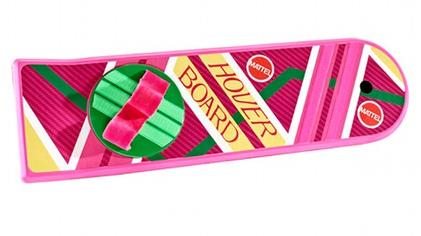
Pictured: a lie.

Limitations

Being an egotistical maniac: Maybe you should consider experiences beyond your own and those of your immediate social groups when you're choosing an anchor point, jerk.

For the last time, not everyone is a male model.


4. Simulation

We use this heuristic to judge what the outcome of an event will be, based on how easily you can imagine that outcome happening. The Machines also use simulation to keep humanity blissfully oblivious in the best era of our history, which is apparently the nineties?
Ahhh why are they all wearing mom jeans?!!

Limitations

Counterfactual construction (if only): To best understand this, here's that story I promised earlier.
"Mr. Crane and Mr. Tees were scheduled to leave the airport on different flights, at the same time. They traveled from town in the same limousine, were caught in a traffic jam, and arrived at the airport thirty minutes after the scheduled departure time of their flights.
Mr. Crane is told his flight left on time.
Mr. Tees is told that his flight was delayed, and just left five minutes ago.
Who is more upset? Mr. Crane or Mr. Tees?" (Kahneman and Tversky 1982, pg. 203)
Mr. Tees, right? Because he just missed his flight. He totally could have made it if not for those stupid ducks crossing the street!
This is just absurd.
We also use counterfactual construction to assess causality by finding unusual factors in an event that led to a dramatic outcome. If a man is shot while shopping at a grocery store far from his house instead of the one he normally visits, people will give him higher compensation for damages (Miller and McFarland 1986).

Misc.: Imagining an event makes it seem more likely. If you're trying to quit smoking, imaging yourself doing so might help.


BONUS: Affect Heuristic

Genetically modified food has saved over a billion people from starvation.
Frankenfood is unnatural.
Now, how does that make you feel? Sometimes, you just have to go with your gut. But really, you're just making judgments based on your emotional response to the issue at hand. So, you know, maybe slow down and take a minute to consider before you demonize golden rice. :)


Happy New Year, friends! I promise I'll try to post more radical science proclamations in 2017!


References/Further Reading

Gregory WL, Burroughs WJ and Ainslie FM (1985). "Self-Relevant Scenarios as an Indirect Means of Attitude Change". Personality and Social Psychology Bulletin 11(4): 435–444. doi:10.1177/0146167285114009.
Fiske ST and Taylor SE (1991). Social Cognition (2nd ed.). New York: McGraw-Hill.

Kahneman D and Tversky A (1981). The simulation heuristic. (Report No. 5). Retrieved from http://oai.dtic.mil/oai/oai?verb=getRecord&metadataPrefix=html&identifier=ADA099504

Tversky A and Kahneman D (1974). "Judgement under uncertainty: Heuristics and biases". Science 185(4157):1124-1131.


Wednesday, December 16, 2015

Life without water

Imagine, for a moment, something that means "life" to you. What do you see?


A tree?

A vibrant reef?

One of those tiny humans your friends are always talking about?
You may notice that all of those things have something in common--they have a whole boatload of water in them.
Refreshing.

You see, dear reader, here on planet Earth water is considered to be the "solvent of life". Water dissolves more compounds than any other solvent known to humanity. It plays a crucial role in a huge number of biochemical processes--there are so many enzymes that require water to function that I can't even. Water can be found in all three phases of matter in our planetary climate (here's hoping we still have the solid form in a few centuries). Speaking of which, water also helps regulate our climate because of its high heat capacity.

Wow. H2O sounds pretty sweet, in a flavorless sort of way. No wonder everyone gets so excited when NASA releases another report with evidence of water on Mars.

As sarcastic as those reports might be.

Ok, so, real talk for a minute. You already know I'm not going to just talk about how great water is, because you read the title of this post. What, then, will I suggest as an alternative?

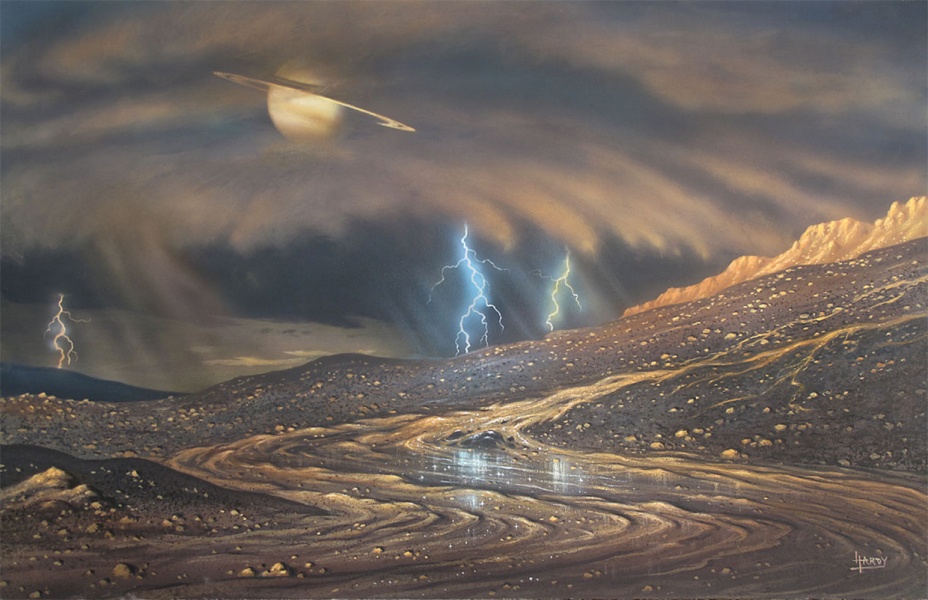
It turns out there are several that people much smarter than I have bandied about. One that could exist in our own solar system is methane. On Titan, one of Saturn's moons, it is so cold that small hydrocarbons like methane and ethane are liquid. There are vast oceans and rivers of the stuff, and when it rains, you bet your bottom it's raining men. I mean, methane.
Artist renderings are the best renderings.

Of course, it is quite chilly on Titan (-179°C, or -290°F, whichever is your poison), so things would probably happen much slower than they do here on Earth. Another option is formamide, which has a large range of temperatures in which it is liquid and can do things like help synthesize DNA bases (a comforting fact for us Earthlings). More promising still is ammonia, which is liquid in about the same temperature range as water (-107°F to 204°F), as long as you crank up the atmospheric pressure to 60 times what we're used to. It's also great at dissolving lots of different things, which is handy if you'd like to synthesize lots of different things.

Needless to say, we'll really have to think outside the box and keep our minds open to even find life of this sort--by necessity, it would be completely different from what we're used to. So how would we find these lifeforms, if indeed they do exist?

Let us harken back to middle school science class, or some similarly far away time, wherein we learned of:


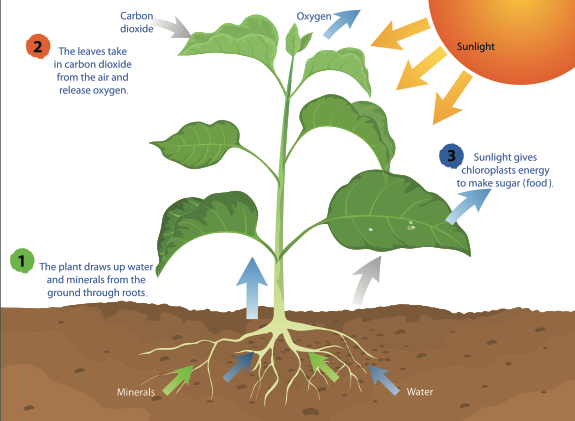
Our first step is to conceive a hypothesis! Now, we know that any life form, big or small, watery or methaney, must 1) consume things, 2) convert these things to other things to obtain energy, and 3) excrete the byproducts of conversion. For example, plants consume sunlight, water, and carbon dioxide to produce glucose, and they excrete oxygen.

Therefore, if we observe a region that is becoming depleted in carbon dioxide and enriched in oxygen, we might assume that there are plants there. Perhaps you now see where I am going. We do not know how strange, non-water-based beings might work, but we do know how chemistry works. If we take a system, say Titan, and we lay out all of the chemicals and environmental conditions (temperature, pressure, weather patterns) that are likely to occur there, we can start to think about what reactions could take place there, and then reduce that down to the reactions that would give off energy for an organism to use.

At that point, we have hypotheses to test. We could put forth that an organism can consume hydrogen, acetylene, and ethane for energy, and exhale methane as a waste product. Now we mosey on over to Titan and we start looking for the disappearance of hydrogen, acetylene, and ethane, combined with a mysterious increase in methane. Is it life? Maybe not. But from here we can make further assumptions and test them, and so on and so forth.

And you know what's funny? It does seem like there is some "unkown process" consuming--you guessed it--hydrogen, acetylene, and ethane on the surface of Titan....


Reference for that last zinger: Stevenson J, Lunine J, & Clancy P (2015). Membrane alternatives in worlds without oxygen: Creation of an azotosome. Science Advances 1(1):e1400067. doi: 10.1126/sciadv.1400067

Friday, October 16, 2015

Life: What works and what doesn't, through the eyes of a Nobel Laureate

Dearest readers, we apologize sincerely for our absence these past months. We know how much you miss our bumbling insights into the wild ways of the universe. What follows is perhaps not the typical fare you have come to expect from our humble blog, but we trust that you will enjoy it all the same!


**The responses below are not direct quotes. They are paraphrased summaries of Sir Harry's answers to questions.**


Today, we in Postgraduate Peer Mentoring Group had the fantastic opportunity to talk with Sir Harold Kroto through the wonders of technology. Harry (as he prefers to be called) is, in his own words, "an atheist (or free-thinker), a humanist and a humorist". He is also an enthusiastic artist. As a student at the University of Sheffield, he met (and married) his wife, Margaret. They later had two sons, Stephen and David, who are in film production and cartoons, respectively. Below are the questions we put to Sir Harry and the responses he gave. If you'd like to learn more about Sir Harry, you can read his bio on the Nobel Prize website, or visit his own personal website, which has a number of cool graphics and videos! Additionally, if you are as inspired by Sir Harry's humble wisdom and visions for a better world as we were, you can donate to Amnesty International in his honor here: www.amnesty.org.


How does your experience and interest in art influence how you approach science (and vice versa)?
They [science and art] are identical. The biggest difference between them is this: in art, you’re in control. In science, the universe is in control.


How important has your pursuit of hobbies outside of science been to the advancement and success of your scientific career?

Many ways; for example, I believe my interest in graphics was very important in recognizing the structure of C60 when we obtained it.


What hobbies did you have besides science as a student?

I did a lot of things. I played tennis, I was the art editor for the student magazine, I met my wife, I learned to play guitar. In my last year, I didn’t do these things very much because I was focused on finishing. But I did a lot outside of science.


If you had do-over for your career and went back to when you were beginning your university study, what would you study if chemistry was not an option?

I would not be a scientist. I was interested in architecture and graphic art, but I didn’t think I could make a career in graphics. I didn’t realize then how many options I had.


What is the biggest challenge that you have had to face in your career? How did you overcome this obstacle?

I never went for challenges. I did things that were interesting, but I didn’t try to go for big challenges. My biggest challenge now is my recent ALS diagnosis. Because of that, I’ve had to give up science, but I deal with it by doing things like this with you guys, trying to help you. My advice is don’t go for competition. Do what you’re interested in personally.


Did you find it challenging to achieve good work/life balance in your academic career? How did you make time for family and hobbies in a busy schedule?

I didn’t make enough time for my family. I think it would have been easier if my children weren’t different from me, if they had been interested in science. One is in film production, one is a cartoonist. You need help to manage. I was very lucky to have my wife Margaret to help me.


What are some strategies that you used to assist you in working effectively and to manage time?

I have a problem with time management; I get very focused on something and then it’s three in the morning and I haven’t done anything else. But I will say my only strategy is never to do anything second rate. If you’re willing to do it second rate, do something else that you will do the best you can.


What is your opinion about science education as it is currently structured today. Do you think that our current methods are sustainable and beneficial, or do we need to make changes to better prepare future generations of scientists?

There are big problems in the current system. I don’t know how to fix them. We need to give our students hands-on familiarity with chemistry, physics, etc. They need to understand how dangerous these tools can be; familiarity breeds respect. We need to make sure they get these experiences in their early years of college. They’re not getting them in high school.


What do you consider to be your greatest achievement?

The NMR structure of C60. All of the atoms were equivalent! That meant it either had to be a truncated icosahedron or a ring. It was beautiful.


How has teamwork influenced your discoveries/work/professional life?

Very profoundly. It’s a two body collision. When I was studying phosphaalkenes, I had a colleague that was very good at making these compounds. Why spend all that time doing it myself when I could have him do it and put him on the paper? Bring together existing talent to get things done.


Have you ever felt like quitting science? How did you stay motivated?

I thought that maybe I wouldn’t be clever enough. I figured I’d give it 5 years, and if I wasn’t good I would get out and do graphic design, which I already had some experience in. I never did anything to stay motivated; little things came up to keep my attention and keep me interested.


In what ways do you leverage your status as a Nobel Laureate to speak out about changes that you feel need to be made in society today? How can someone without a Nobel help society? Is it easier now to make a positive difference in the world than in years past?

Well, what I’m doing right now! Talking to youngsters like you. I was a sixties kid; I was born the month after WWII started. Once I was 6 or 7, every year after that got better. Then we had the Beatles, the Rolling Stones, mini skirts. We were optimistic about flower power and people learning to be nice to each other. It looked easier then, but it wasn’t really.
I think what you youngsters have now is access to instantaneous information. I think our biggest problem is that governments and people are not in charge, big business is. If you get into an industry position, steer them towards humanitarian things. They’ll make more money selling things that people want than they will selling governments things people don’t want [weapons, fighter jets, etc.].


In conclusion:
Don’t take anything a Nobel Prize winner says seriously! Don’t just accept what I say. Think about it for yourself.


Originally posted on the Wisconsin Involvement Network.

Sunday, April 12, 2015

Why alcohol burns a cut

If, like most non-robotic megafauna, you've ever had the misfortune of cutting yourself, chances are that at some point you have poured alcohol on that bad boy to ward off infection.

Also included in the category "megafauna". In case you were feeling too pleased with yourself.
Chances are also high that you immediately regretted this decision, because it made what may have been a fairly minor pain a whole lot worse.

Despite how common this experience I'm describing is, not very many people know the reason behind it. Luckily, for the sake of this post, I am one of those people.

As you are probably aware, you have the ability to sense heat and cold.


This is because there are proteins on the surface of our cells called temperature sensitive channels. When you stick your hand in a fire, they're what tells you, "Hey! That's hot!" Let's get some perspective on where these things are in our bodies.


These channels open and close depending on the ambient temperature. The stuff that they then let in or out interacts with other proteins in your cells propagating the signal until it reaches someone that does something about it.

Now when you douse these channels with alcohol, speaking of the heat-responsive channels in particular, it changes how they respond to temperature. In essence, it lowers their "threshold", which we can think of as the temperature where it tells your cells to freak out. Alcohol puts that threshold so low that your own body temperature causes the channels to open! Thus it makes your body think that you're burning when really you're just existing.

There are other things besides heat (or lack thereof) and alcohol that affect these channels. Spicy food is described as "hot" for a reason--capsaicin, the active ingredient in peppers, binds to heat-sensitive channels and activates them. A common side effect of menthol and eucalyptus oil is a cooling sensation, which you can probably surmise comes from activation of cold-sensitive channels.

Now you know why this stuff confuses your mouth so much.

Monday, March 2, 2015

Non-science diversion: Liebster Award

We here at Wee Knight Science have been nominated for the eminent Liebster Award!


Yay! Matthew has handed the reins to me on this one. I suspect he just doesn't want the world knowing his secrets (i.e. favorite condiments).

So the dealio here is that I'm given 10 questions to answer, and I'm supposed to nominate 8 more people, preferably smaller, up-and-coming blogs, and give them 10 more questions. Sadly the only blog I read under that category is the one of the person who nominated me, Mini MD! Go check her out if you want the skinny on med school and being a vegan yogi, she is an awesome person and blogger.

And bathroom selfie enthusiast.


Enough of that. On to the questions!

1) What is your favorite ride at Disney (or equivalent)?
J: I've never been to Disney! I guess my favorite amusement park ride is the carousel, because I am a wuss and hate roller coasters and have only been on one. But I did go on the biggest one at that park (240 feet straight down), just in case.
2) What's the best vacation you ever took?
J: Door County, Wisconsin, last summer. It is just the most idyllic little countryside vacation spot, and every one of the little towns scattered about has at least one fudge shop. Cherries everywhere, cherry flavored everything. Just go there. It's great. 
3) Do you have a hidden talent?
J: How hidden? I can play piano, and on a very very VERY good day I can put a grown man on the ground, but if someone were actually attacking me I'd probably just get squished.
BONUS: Matt's hidden talent is a fantastic goat impression.
4) Who was your favorite teacher in grade school?
J: Greg Goble, my eighth grade algebra teacher. I already knew algebra at the time, but he was a funny guy and he let us read in class.
5) What is the first thing you do every morning?
J: Check my email.
6) If you had to do a job that wasn't medicine/science related, what would it be?
J: I think I would be an author (strictly fiction).
7) Do you prefer ketchup or mustard? Coffee or tea? Vanilla or chocolate?
J: Ketchup, coffee, chocolate >>>>>>>>>> vanilla.
8) What is the best life-hack you've come across or invented?
J: This one is for my science homies out there. If people keep taking your reagents without asking, mis-label them, or don't label them at all.
What is this? 6 XLD's? A tube of food coloring? Gonorrhea? NO ONE KNOWS

9) Who is your favorite band/singer?
J: Sick Puppies.
10) What three things would you take with you to a deserted island?
J: My boyfriend (for cooking/cuddling), my Kindle, and a metric butt-ton of chocolate.

Ladies and gentlemen, thank you for reading, this has been Monday Morning at the Lab!

Saturday, February 14, 2015

Microbiota, invasive species, and Star Trek

So I've had a notion knockin' around in my noggin, and for once it doesn't involve me just regurgitating interesting facts at you. You may have noticed that the title of this post seems somewhat...erratic. Don't worry, we'll clear up that confusion posthaste.

As my fellow Trekkies well know, the crew of the starship Enterprise (my personal favorite was NC 1701-D, but this applies to all) were frequent visitors to new and unknown worlds, many of which happened to have their own suspiciously humanoid* life forms.

Now, those of us who are up to date on our yogurt commercials will also know that the human body, and indeed every multicellular organism we've dared to study, is just brimming with bacteria, viruses, and even a few fungi for funsies. Thusly, it is fairly safe to assume that if we did find other multicellular life, those life forms would probably be teeming with unicellular organisms themselves.

And if in addition to a working knowledge of Star Trek and fermented dairy products you also know that a baby giant tortoise has not been seen in the Galapagos isles for over a century because of rats introduced by humans, then either you see where this is going or you need another cup of coffee!

That's right! I'm wondering why none of the aliens ever get irritable bowel syndrome from being visited by humanity!

Sorry, that might have been too much of a leap. Basically, would we even be allowed on another civilization's planet? Smallpox wiped out the Native Americans, could our microbiota not just as easily massacre innocent Martians? Conversely, perhaps the Martians would inadvertently massacre us!

At the same time, one has to recognize that microbes have evolved to inhabit absolutely every single ecological niche in which earthly life can exist. This raises the point that perhaps there would be no niche for a human microbe to invade on planet Vulcan. They're all full!

I regret to say that I don't have enough frequent flyer miles to get to Romulus right now, so I have no empirical evidence to sway you one way or the other. But maybe this is something to think about when we finally do find our way to the stars.

*If you remember the two part episode in The Next Generation where they explain this, let's be friends.

Sunday, February 1, 2015

Informal Digression: Part 1: An exploration into your fat cells

Ladies and gentlemen, thank you for joining us here on the blog. Julia has been doing a great job of putting the words on the page and getting you to read it. And look at that Knight! He's so Wee, and there isn't even anything around him to show that he's wee. Pretty rad.

So, I must admit that I have been slacking in putting up some/any posts, but all that's about to change! I want to talk to you today about something that everyone encounters, but some people to a larger extent than others. Yup, that's right. I'm talking about adipocytes, your fat cells. Now let's level here and admit that we all have them, no matter how much we diet or exercise or whatever, they're there. And for that we are thankful. Adipocytes are an important part of your life.

This is the life.

In fact, the average adult has about 30,000,000,000 fat cells that add about 30 lbs to your weight! That's pretty impressive.


Wowie!

Fat cells generally come in two different types (well, I've read about a new type, but it seems like a mix of these two). The first type of fat cell is called white adipose tissue. These cells do what you probably think a fat cell would do. They hold a bunch of fat. I mean a LOT of fat. These puppies have such a big ol' ball of fat inside of them that they squeeze the nucleus onto the outskirts of the cell.


The other type of fat cell is called brown adipose tissue. These cells have a look to 'em. Instead of one big lipid droplet (lipid=fat), they have a bunch of smaller ones. They are also home to a whole bunch of mitochondria. The mitochondria contain proteins with iron, which is what gives these cells their brown color. What are all those mitochondria doing there, you ask? They're making heat.


Burn baby burn!

Brown adipose tissue is quite abundant in babies and in hibernators. The brown adipose tissue has all these mitochondria, and these mitochondria produce a lot of this protein called thermogenin. Yeah, that's right. Thermogenin. What a cool name. Let's break it down. Thermo, for heat, and genin, for genesis or generation. Now you probably remember from one of your biology classes that the mitochondria is the energy producer for the cell. The way the mitochondria produces the energy currency of your body, ATP, is by pumping protons (hydrogen atoms without an electron) out across its membrane and then letting these protons come back in through a special port that makes ATP as the protons come through. It's a pretty cool deal. Maybe I should do a blog post on that...

Well what's special about the mitochondria in brown adipose tissue is that they have a lot of thermogenin. This thermogenin is another way for the protons to come back through the membrane, but instead of making ATP, the thermogenin converts that electrochemical potential into heat! That's why babies (and hibernators) don't need to shiver. They instead have little biochemical space heaters. Pretty neat.


Saturday, January 24, 2015

The toothpaste conspiracy

Dearest readers, I became aware of a great injustice this evening while shopping at Target.
Clever readers, do not spend $5 on toothpaste. Toothpaste is sand (usually diatomaceous earth, i.e. gook from a hole in the bottom of the sea), fluoride, and minty flavor. That is all toothpaste will ever need to be: fluoridated, minty sandpaper. There will never be any new innovations in the science of tooth scraping. Crest Pro-Health will not make your teeth any whiter than Crest 3D Brightschnazzles, and truly, your teeth should be slightly yellow because that is the natural color of enamel.
Thus I implore you not to be taken in by toothpaste chicanery, and instead buy the cheap stuff.
Unless you really want mint lime zest flavor, then I guess do what you want. Just don't expect it to make you more adventurous.


Monday, January 5, 2015

Killing for Science: Sterilization with Gamma Radiation

As with most of my posts, this story begins with me and my curiosity.

We enjoy back scratches and long walks on the beach. I am so good at Photoshop. Wow. Just wow.
In the depths of the windowless labs that grad students such as myself call home, one will often find a number of things saying, "Sterilized with gamma radiation."
I'm having trouble actually finding one at the moment, so enjoy this blurry picture instead.
Being an eminent scientist of highest regard, I of course know what gamma radiation is. It is the highest energy, shortest wavelength of light (electromagnetic radiation).
Thank you, Victor Blacus of Wikipedia, for this nice image!
But the question remains, and has quietly niggled at the back of my mind, of how one creates such radiation in a controlled manner. In addition, how does one protect oneself from these Death Rays of Death(TM)? To answer these questions, I once again don my Internet armor and brave the wilds of Google!

Pretty much exactly like this.
Gamma radiation is generally produced in commercial settings by cobalt 60, an isotope of cobalt that is artificially created in ATOM SMASHERS (capitals used for dramatic effect). These Death Rays of Death(TM) are incredibly good at penetrating matter (are you thinking something dirty? Stop that. Shame on you), which is why they are great for sterilizing things, particularly things that are already packaged. When they actually do hit something, they whack electrons off of it. Inside of cells, that creates ions and radicals that go on to react with ans destroy everything else. Because the Death Rays are so good at getting through stuff, it takes a lot to keep them off you. You know how, at the dentist, they put that lead vest on you to take a tooth x-ray? Same concept, just a slightly bigger vest. Maybe like a foot thick.

Is that it, I imagine you asking? Well, some stories are short. Plus, I'm on vacation right now, so I'm shocked I actually finished this post before the new year! I wouldn't count on any more for a week or two, unless my co-blogger feels his spirit moved to write. Merry Holidays!


UPDATE: Super cool extra bit of awesome (that I forgot to add before):
According to my microbiology professor in undergrad, ground black pepper is chock-full of wee bits of insect and whatnot, because the producers can just sterilize it post-grinding. I've never actually tried it, but he said that you can see shiny pieces of beetle shell if you look at ground pepper under a microscope. Bon appetit!

Tuesday, December 16, 2014

Where do animals go in the winter? The tale of the wood frog

I spent the first 18 years of my life in North Carolina, and I can count the number of times it snowed in my hometown (village, really) on one hand. Now that I've moved to Wisconsin, deep in the frigid North, I find myself wondering every year around November where all the little critters go in anticipation of the impending deluge of snowflakes. Birds obviously migrate South, and bears hibernate in cozy holes, but what about squirrels and rabbits?
Optional digression: Earlier this year I met two baby bunnies! There are a ton of rabbits around my apartment complex. One evening I was walking up to the front door when I noticed some movement. Being a nature enthusiast, I stopped immediately because I suspected there might be an interesting critter in the vicinity. Sure enough, two little bunlets (if that's not the term, it should be) and their mama were in the grass right in front of my building. I crouched down to try to look less threatening, and one of the little fellows hopped right up to my foot! He (or she) touched me! I have high hopes for that bunlet and his family.

HE'S SO CUTE

Back to original story! It's entirely possible, I suppose, that other furry creatures also migrate in the harsher months, but what about snakes and frogs and insects? Surely they don't ALL migrate. So, I've been curious for several winters and I finally bothered to do some in-depth research (i.e., I googled it). Because this topic has already been covered by other intrepid bloggers, I've included a bonus look into the life of the wood frog!
It turns out that two of the animals I mentioned before, squirrels and rabbits, actually stay active in the winter and just do their best to find food and keep warm in trees and burrows [1]. Chipmunks, on the other hand, hibernate like bears [2].
Reptiles like snakes will also take shelter in burrows. Fish will move to the bottom of lakes and ponds where the water won't freeze, and turtles and frogs hide out in water bodies too, entering a dormant state and absorbing oxygen from the water through their skin [3].
Some insects, such as the silkworm Bombyx mori, will enter a hibernation-like state called diapause during the winter [4]. Others lay eggs which will hatch in the spring, then die. Still others simply hang out in various hidey-holes (tree bark, fallen logs, dirt). An interesting variation on this theme is the gall. You've probably seen plants that seemed to have warts, like so:

Ewwwwwwww

This is actually a wee insect's home. Bugs like eriophyid mites secrete compounds that bulge out the plant tissues, then live there and munch on the plant throughout the winter like a bunch of degenerates [5].
And then there's the wood frog. Rana sylvatica, much like Geobacter sulfurreducens (I have a blog post on that, too!), just doesn't give a fuck.

Pretty cool background, huh? Even if it's not as cool as Arya. I got it here.

These frogs can survive being frozen in the winter, so when it starts to get nippy they just hunker down under some dead leaves near a woodland pool (gotta be ready to start making babies in the spring) and turn into frog cubes.
Like this. Except, you know, frog.
Yeeeeeaaaahhhhh.

They are able to do this because they accumulate cryoprotectants--antifreeze*, basically--in their blood and tissues to decrease the formation of ice crystals that would rip their cells open. Soooper cool (that was a pun).
I'll leave you with this video of scientists playing with frozen wood frogs because...science?


*Not technically true. Antifreeze prevents freezing, while these compounds minimize the size of ice crystals that form, which reduces the stress on the cells (less stabby stabby = good). They do also prevent freezing to some extent because of freezing point depression, but that does not seem to be their main purpose. There ARE critters that have antifreeze in their blood (some Antarctic fishes come to mind), but those are a topic for another day :)


References:

  1. http://wdfw.wa.gov/living/rabbits.html
  2. http://animals.nationalgeographic.com/animals/mammals/chipmunk/
  3. http://www.newton.dep.anl.gov/natbltn/400-499/nb485.htm
  4. Okitsugu Yamashita (1996). Diapause hormone of the silkworm, Bombyx mori: Structure, gene expression and function. Journal of Insect Physiology 42(7):669-679.
  5. Robert Wawrzynski, Jeffrey Hahn, and Mark Ascerno (2005). Insect and mite galls. University of Minnesota. http://www.extension.umn.edu/garden/insects/find/insect-and-mite-galls/

Wednesday, December 10, 2014

Self-medication in animals

Hi there! Did you know that when your dog eats grass, it's probably because it has an upset stomach and is trying to puke/poop out the problem? Apparently other animals do that too! I found this neat article while traversing the interwebs this morning.Give it a read!

News Feature: Animals that self-medicate by Joel Shurkin

Friday, December 5, 2014

Dianne Newman is awesome

So, yesterday I had breakfast with Dr. Dianne Newman, who is a professor at Cal Tech, and OMGOSH SHE'S SO AMAZING!!

I think her science is pretty cool, but really I like her just because she is such a nice person. I and the other students at the breakfast were asking her a bunch of questions about the usual, how did you become a professor, how do you choose post-docs, how do you feel about the funding climate, etc. Her answers were definitely helpful, and they gave a lot of insight into what kind of person she really is. One thing she said regarding how she chooses post-docs that resonated with me was (paraphrasing), "It's not enough to be intelligent, you have to be nice, too."

Yes!!! Yes! All of my yes! This is so true, especially in this context. Honestly, almost everyone in grad school was at the top of their class in college. We are all smart, and that is not special. It seems like so many professors choose post-docs because they have 5 first author papers or they got a Nature paper or they got this award or that, and completely disregard their character. Along those lines, she also said that she expects her post-docs to help other students in the lab and really be a mentor to other people. Also fabulous. Many, many post-docs are going to look for a faculty job at some point, and the whole point of these positions is to have your own lab, which means you're going to have to mentor people! I just think it's silly when post-docs focus super hard on their research and don't give a sh*t about their labmates.

AND (seriously love this woman), another thought she expressed reminds me of my undergrad advisor, Antje Almeida (who is also awesome and will probably be featured in a future blog post). One thing that I really loved about Antje was that her door was always open--not just for help with research or classes, but also if I just found a funny cat video and wanted to share. Since then, I haven't met a professor that I felt I could ever be friends with. Friendly acquaintances, sure, but not an actual I-send-you-Christmas-presents-and-invite-you-to-my-wedding friend. I was getting that same friendly vibe from Dr. Newman. In fact, she explicitly said that she wants to be a part of the group in her lab, and have people stop by her office just to say "hi" sometimes instead of always for business.

Of course I also respect her so much for being a successful, tenured professor at a respected university and having a family at the same time. You hear so much on the interwebs about gender discrimination; it's nice to see a success story now and then.

I almost want to do a postdoc just so I can work in her lab...

Friday, November 21, 2014

Sea star wasting: what is it and why do we care?

Sea star wasting syndrome (SSWS). What the heck is that? It's this:

Holy crap. If you want to skip straight to the sad parts, check out around 4:20. I couldn't find the video to post it here, but somewhere out there is a video of starfish literally walking themselves apart; two arms going in opposite directions, then *boop* three-armed starfish! Awful.

Obviously, that kind of sucks for starfish, but who really cares? They're not pretty like this lovely critter:
Pictured: a male violet-crowned woodnymph. Thanks for the photo, Joseph C Boone of Wikipedia land!
And they eat and poop through the same hole, so they can't be contributing to global IQ levels too much.

Luckily, you don't need brains to eat, and these dudes eat a lot. They are in many ecosystems what is called a keystone species: a species whose effect on its ecosystem is disproportionate to its population size in that ecosystem. Starfish eat shellfish like sea urchins and mussels, keeping their population in check. If you take starfish out of the equation, the shellfish population explodes. This throws the ecosystem out of balance--suddenly you have a plethora of clams roving around, eating all the food and taking all the nice rocks for themselves. But wait, there's more!

Getting rid of the starfish also destroys a food source for several predators: sharks, rays, and sea anemones. Sharks in particular could just eat more regulat, fish-shaped fish, but that would cause the fish, but that would cause the fish population to plummet and the price of tuna would go up and next thing you know Chicken of the Sea costs $20 a can. It's not a great scenario.
Pictured: not worth it.
So why are all the sea stars dying? What is causing this disease, and can you get it by kissing a starfish?

The cause of SSWS has been a mystery since it was first observed in January of this year, but this month research groups at Cornell (among other places) showed some pretty decent evidence that the condition is caused by a kind of virus called a densovirus. The researchers ground up some diseased sea stars and filtered everything larger than a virus out of the sea star puree (mmmm, tasty), then infected healthy starfish with this virus soup. Within a couple weeks, most of the healthy starfish started showing symptoms of SSWS.
The control is boiled starfish puree. From Hewson et al. 2014, PNAS
They also found these little guys in diseased starfish:
From Hewson et al. 2014, PNAS
Using genetic analysis, they determined that this was a type of virus called a densovirus. Densoviruses are small, icosahedral DNA viruses; icosahedral just means they are shaped like an icosahedron, pictured below.
I'm poor, so you'll have to deal with the watermark.
Now that we are reasonably sure what is causing SSWS, what do we do about it? Well, science fans, that question is still unanswered. But at least we know where to start!


Pictures?
I realized that when I link to a picture here, you can just click on it to get to the original source, so I've decided to stop including the links down here. It only took me three blog posts to figure that out!

Wednesday, November 5, 2014

How do you cool something?

I think we can all agree that refrigerators are made of magic. But, it may surprise you to know that there is also some science sprinkled in for funsies. Since I never got my letter from Hogwarts, I can't tell you about the first point, but I have journeyed far and wide (to the other side of the lab where the physicist--my co-blogger!--sits) to discover the secrets of

Let us begin with a quick refresher on thermodynamics. Hey, get back here! I swear it's not scary or hard. What it is is a great word to use to make your friends think you're smart. Look, we're just going to use this teensy equation, very harmless...

PV = nRT
where P is pressure, V is volume, T is temperature, n is number of molecules and R is the gas constant.

Super easy, right? Pressure, volume and temperature are proportional to each other! So, if we increase the pressure, either volume will decrease or temperature will increase--or, more likely, a little bit of both. Let's pop some numbers in there so you believe me. I'm going to ignore n and R for simplicity.
Let P = 5, V = 6, T = 30

P*V = T, therefore 5*6 = 30 (woo!)

Now, P = 6. Three options:
(1) V decreases to 5
(2) T increases to 36
(3) Mix of 1 and 2

What's that? You'd like a real world example? Alright, science fans, I whipped this one up just for you! Let us turn to our faithful friend, water.
Is that not just fabulous? Doesn't it make you feel good just looking at it?
As you know, if you take a room temperature pot of water and increase the temperature until it boils, it will turn to steam. Now, the temperature of the steam won't rise until all of the water evaporates (for reasons I will not get into because they aren't that interesting to most people). However, you will note that steam takes up a LOT more space than water does, which--oh my goodness here it comes--decreases the pressure.
Did you see what I did there?!
Why does it decrease the pressure? Because the molecules are farther apart! If you take a packed bus full of people and spread them out among 5 buses, those people feel less pressure on them from fellow bus-goers. Same deal with water and steam. Boom. We just proved that PV = nRT, the ideal gas equation, works in real life.

Now, armed with this thermodynamical knowledge, we are fully prepared to battle understand

If you have a refrigerator and you ever bothered to look at the back of it, you probably saw something like this:

What's going on there? I have made this very detailed, scientific, post-modern illustration to explain.


What a great invention. Science!


Pictures!